
A serious car crash can change a family’s life in seconds.
Medical bills arrive. Work gets missed. A vehicle may need to be repaired or replaced. For someone with a catastrophic injury, the financial and personal consequences can continue for years.
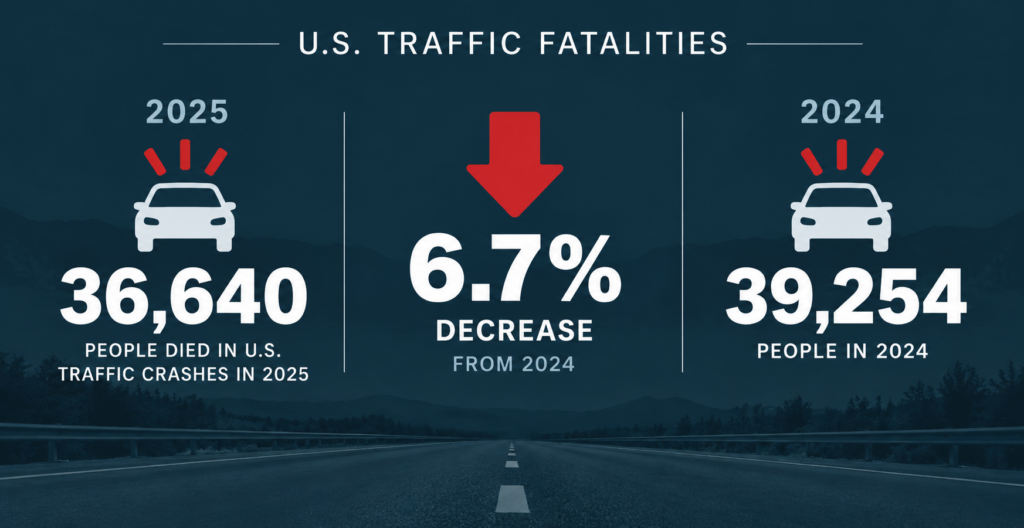
The latest federal data shows some progress. An estimated 36,640 people died in U.S. traffic crashes in 2025, down 6.7% from 2024. Still, tens of thousands of families lose someone on America’s roads each year.
The financial toll is also enormous.
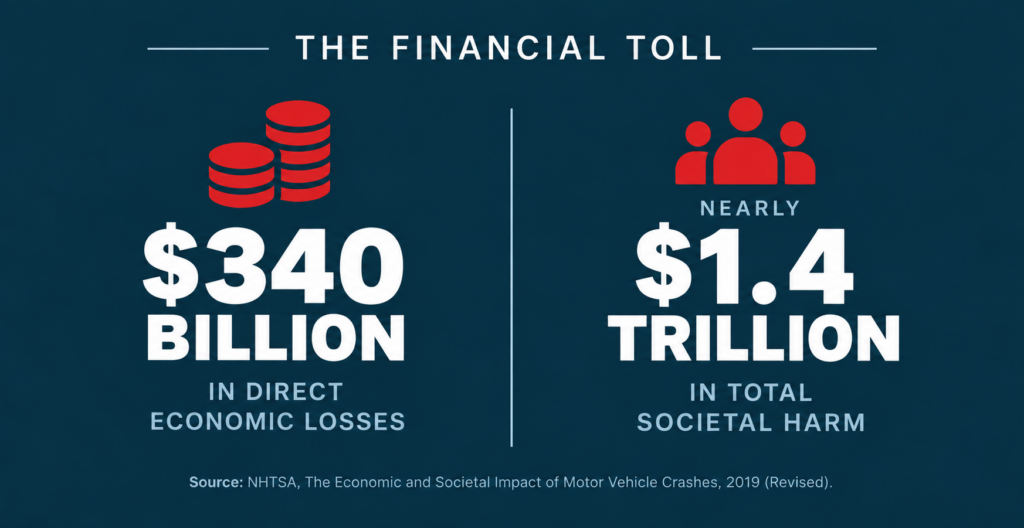
NHTSA’s most recent comprehensive economic study, based on 2019 crashes, estimated $340 billion in direct economic losses and nearly $1.4 trillion in total societal harm when the effects of deaths, injuries, and reduced quality of life were included.
What a Single Crash Actually Costs
NHTSA’s report breaks the national total down into figures that are easier to hold onto.
The lifetime economic cost to society for a single traffic fatality is $1.6 million, and more than 90 percent of that comes from lost workplace and household productivity plus legal costs, not medical bills.
A critically injured survivor costs an average of $979,000 over their lifetime.
Medical costs and lost productivity alone account for 81 percent of that figure, meaning the financial weight of a serious crash rarely ends when a victim leaves the hospital.
Traffic congestion caused by crashes adds another layer entirely.
NHTSA put the cost of crash-related congestion, lost time, wasted fuel, and the associated environmental impact, at $36 billion in 2019.
What’s Driving the Cost: The Same Three Culprits, Year After Year
NHTSA’s report points to the same preventable behaviors behind most of the harm.
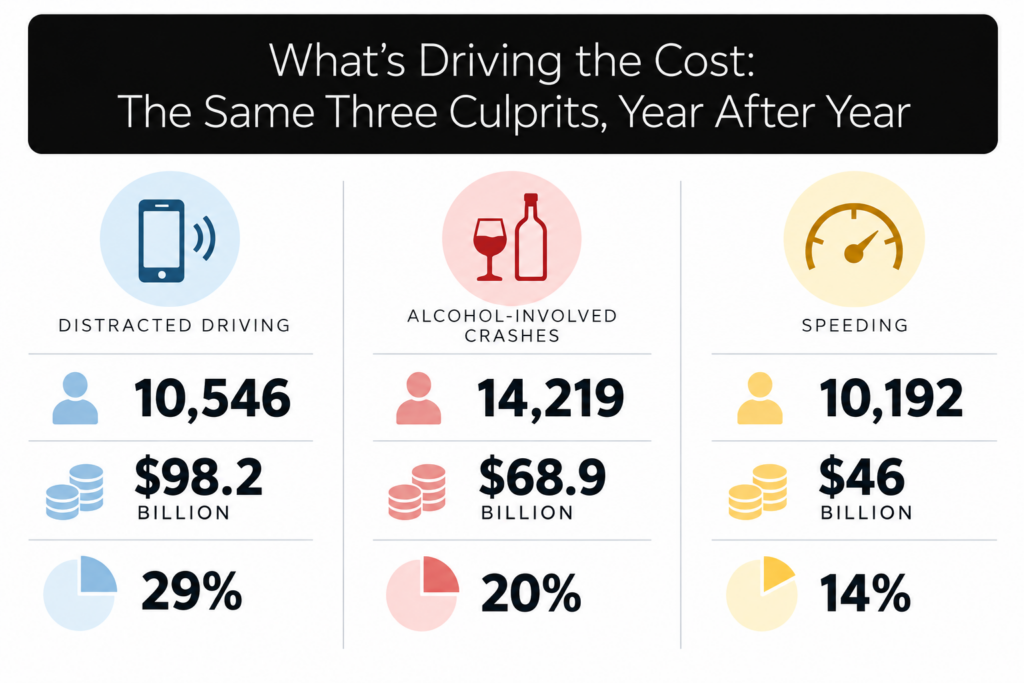
Distracted driving was the single biggest contributor. Crashes involving a distracted driver caused 10,546 deaths and $98.2 billion in economic costs in 2019, nearly 29 percent of all crash costs nationwide.
Alcohol-involved crashes came in close behind, resulting in 14,219 fatalities and $68.9 billion in economic costs, about 20 percent of the total. Crashes involving a driver at or above the legal limit accounted for more than 90 percent of that alcohol-related harm.
Speeding rounded out the top three, tied to 10,192 deaths and $46 billion in economic costs, or about 14 percent of the national total.
None of these are accidents in the truest sense. They’re choices, made behind the wheel, that end up costing the rest of us.
Who Actually Pays for These Crashes
Here’s the part that surprises most people: you’re paying for other drivers’ mistakes whether you’re ever in a wreck or not.
NHTSA found that people who weren’t directly involved in a crash still cover roughly three-quarters of all crash costs through higher insurance premiums, taxes, and traffic congestion.
Taxpayers alone absorbed about $30 billion in crash-related costs in 2019, the equivalent of $230 in added taxes for every American household.
The One Thing That’s Actually Working
Buried in the same report is a reminder that basic safety habits still make an enormous difference.
From 1975 through 2019, seat belt use saved an estimated 404,000 lives nationwide and prevented $17.8 trillion in societal harm over that span.
That number puts the $1.4 trillion annual cost in perspective. The country already knows how to bring these numbers down. The gap is in how consistently drivers act on it.
Bottom Line
Crash statistics can tell us how widespread the problem is, but they can’t show what a serious motor vehicle crash does to a family.
Behind these numbers are people facing painful injuries, weeks or months away from work, mounting medical bills, and the uncertainty of not knowing what comes next. For families who lose someone they love, the impact can last a lifetime.
At Miller Kory Rowe LLP, the focus is on helping people understand their rights and holding negligent drivers and other responsible parties accountable for the harm they’ve caused.
If you or someone you love was seriously hurt in a motor vehicle crash in Arizona, you don’t have to handle the medical bills, lost income, and insurance process alone. Call (602) 648-4045 for a free consultation to discuss what happened and what options may be available to you.
Frequently Asked Questions
How much do car crashes cost the U.S. each year? The National Highway Traffic Safety Administration puts the total value of societal harm from motor vehicle crashes at nearly $1.4 trillion a year, based on its most recent full study. That figure includes direct economic losses of $340 billion plus the broader cost of lost and diminished lives.
What does a single traffic fatality cost, financially? NHTSA estimates the lifetime economic cost to society of one traffic death at $1.6 million, with more than 90 percent of that tied to lost productivity and legal costs rather than medical expenses.
What causes the most crash-related costs nationally? Distracted driving, alcohol-involved driving, and speeding account for the largest shares of crash costs in the U.S., together responsible for well over half of all economic harm from crashes.
Do I really pay for other people’s crashes even if I’ve never been in one? Yes. NHTSA found that people not directly involved in a crash still cover about three-quarters of total crash costs through higher insurance premiums, taxes, and congestion-related expenses.
How much has seat belt use actually helped? A lot. Seat belts saved an estimated 404,000 lives in the U.S. between 1975 and 2019 and prevented $17.8 trillion in societal harm over that same period, according to NHTSA.
How long do I have to file a car accident claim? Deadlines vary by state. In Arizona, for example, A.R.S. § 12-542 generally gives you two years from the date of the crash to file a personal injury lawsuit. It’s worth confirming your specific deadline with an attorney as soon as possible, especially if the crash happened somewhere other than where you live.
Can I still recover damages if I was partly at fault for the crash? In many states, yes. Arizona, for instance, follows a comparative fault system under A.R.S. § 12-2505, meaning you can still recover compensation even if you share some responsibility for the crash, with your total recovery reduced by your percentage of fault. Rules vary elsewhere, so it’s worth checking your state’s specific approach.